
Trump’s Tough Stance on Putin and Ukraine Ceasefire
Donald Trump isn’t mincing words about Vladimir Putin’s actions regarding Ukraine’s ceasefire negotiations. In a recent NBC News interview, Trump expressed his frustration with Putin’s comments about Ukrainian President Volodymyr Zelenskyy’s credibility. He dismissed Putin’s suggestion of replacing Zelenskyy with a new leader under a U.N. setup, making it clear he won’t stand by as Russia complicates the path to peace.
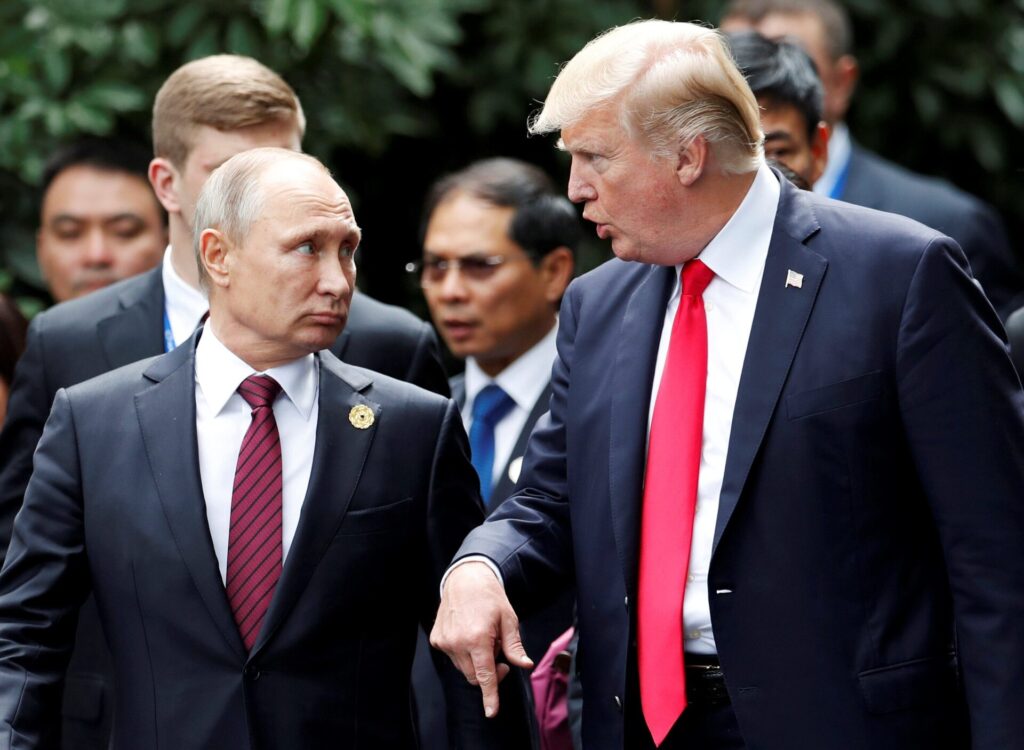
Trump threatened fresh tariffs on Russian oil, a move that could have far-reaching consequences. He’s ready to impose a 25% tariff, potentially increasing to 50% if there’s no ceasefire. This serves as a warning to nations buying Russian oil to reconsider their choices if they want to maintain good relations with the U.S.
"If Russia and I are unable to make a deal on stopping the bloodshed in Ukraine, and if I think it was Russia's fault — which it might not be — but if I think it was Russia's fault, I am going to put secondary tariffs on oil, on all oil coming out of Russia," Trump stated firmly.
Despite the tough talk, Trump remains open to dialogue with Putin, hoping for progress if the Russian leader changes course. He mentioned his anger could subside if positive steps are taken towards peace.
Trump has hinted at setting a ceasefire date, with Finland’s President Alexander Stubb agreeing after a recent meeting. Stubb emphasized the need for a definitive deadline, suggesting Easter as a potential target for the Kremlin to agree to a ceasefire.
Trump’s Secondary Tariffs: A Bold Diplomatic Move
Trump’s proposed secondary tariffs on Russian oil buyers are a bold move in his diplomatic playbook. The 25-50% tariff serves as a stark warning to countries considering purchasing Russian fuel. It’s a financial deterrent aimed not just at Russia, but at the entire global oil market.
This strategy isn’t new for Trump. He’s used similar tactics before, such as with Venezuela, where secondary tariffs forced countries like China to reassess their economic relationships. Now, with major players like India and China being top consumers of Russian oil, Trump’s tariffs could prompt significant strategic recalibrations.
Potential Global Impact
- Reshaping of international oil trade
- Economic pressure on Russia’s allies
- Possible shift in global power dynamics
Trump is also eyeing Iran, hinting at similar sanctions if nuclear negotiations stall. This approach extends beyond oil, touching on broader security and power dynamics across continents.
The global response to Trump’s strategy has been mixed. Some see it as an ultimatum, while others view it as a necessary shake-up of the status quo. Whether seen as audacious or forceful, Trump’s use of secondary tariffs positions him as a key player on the world stage, pushing for an international reset with high stakes.
International Reactions and Diplomatic Challenges
International reactions to Trump’s tariff declaration have varied. Finland’s President Alexander Stubb has aligned with Trump on establishing a ceasefire deadline. During discussions at Mar-a-Lago, they proposed April 20 as the target date for a full ceasefire. This move puts Finland at the forefront of diplomatic pressure alongside the U.S.
However, achieving a ceasefire remains challenging due to Putin’s complex demands. He insists on Ukraine’s demilitarization and rejection of Western peacekeeping presence, complicating negotiations.
Global Leaders’ Responses
- China and India: Reassessing alliances and economic strategies
- Ukraine: Navigating a difficult position while conditionally backing Trump’s ceasefire blueprint
- Western allies: Closely watching Trump’s moves and considering economic implications
Leaders worldwide are closely watching Trump’s moves, contemplating the economic ripple effects of secondary tariffs. China and India, heavily invested in Russian oil, are likely reassessing their alliances and economic strategies.
Ukraine, meanwhile, is navigating a difficult position. While conditionally backing Trump’s ceasefire blueprint, they face a constantly shifting battlefield reality.
Trump’s pressure tactics demonstrate an active U.S. role in international politics. Whether his approach will succeed remains to be seen, but it has certainly captured global attention and could potentially reshape diplomatic norms.
- NBC News. Interview with Donald Trump. March 2024.
- Agence France-Presse. Putin’s comments on Ukrainian transitional government. March 2024.
- U.S. Energy Information Administration. Russian oil imports to the United States. 2023.
- Centre for Research on Energy and Clean Air. Analysis of Russian oil product importers. 2024.
- Reuters. Finnish President Alexander Stubb’s comments on ceasefire deadline. March 2024.