
Trump's Tariff Showdown with China: A High-Stakes Economic Drama
It's high noon in international trade, and President Donald Trump is taking aim at China with his tariff pistol. The message is clear: withdraw the 34% tariff or face a 50% blow. Trump's raising the stakes, accusing China of "long term trading abuses" and calling them the "biggest abuser of them all."
On Truth Social, Trump warns:
"If China does not withdraw its 34% increase by tomorrow, April 8th, 2025, the United States will impose ADDITIONAL Tariffs on China of 50%."
He's not just talking numbers; Trump's pushing for broader economic change, especially with China.
China's foreign ministry isn't backing down, accusing the U.S. of "unilateralism, protectionism, and economic bullying." It's a high-stakes showdown, with both sides refusing to blink.
As the clock ticks down, Trump's ultimatum stands firm. He's halting talks with China if there's no retreat on tariffs, while other nations line up to chat. It's a fiscal frontier, and Trump's all in.
What's next in this trade drama? Will China fold, or is this the start of something bigger? As Trump might say, "It all has to change, but especially with CHINA!!!"
Global Reactions and Economic Ripples
China's standing firm against Trump's aggressive tactics. Their foreign ministry labels U.S. tariffs as "unilateralism" and "economic bullying," accusing America of flouting international economic rules. The People's Daily projects confidence, assuring the world that "the sky won't fall" despite the tariff clash.
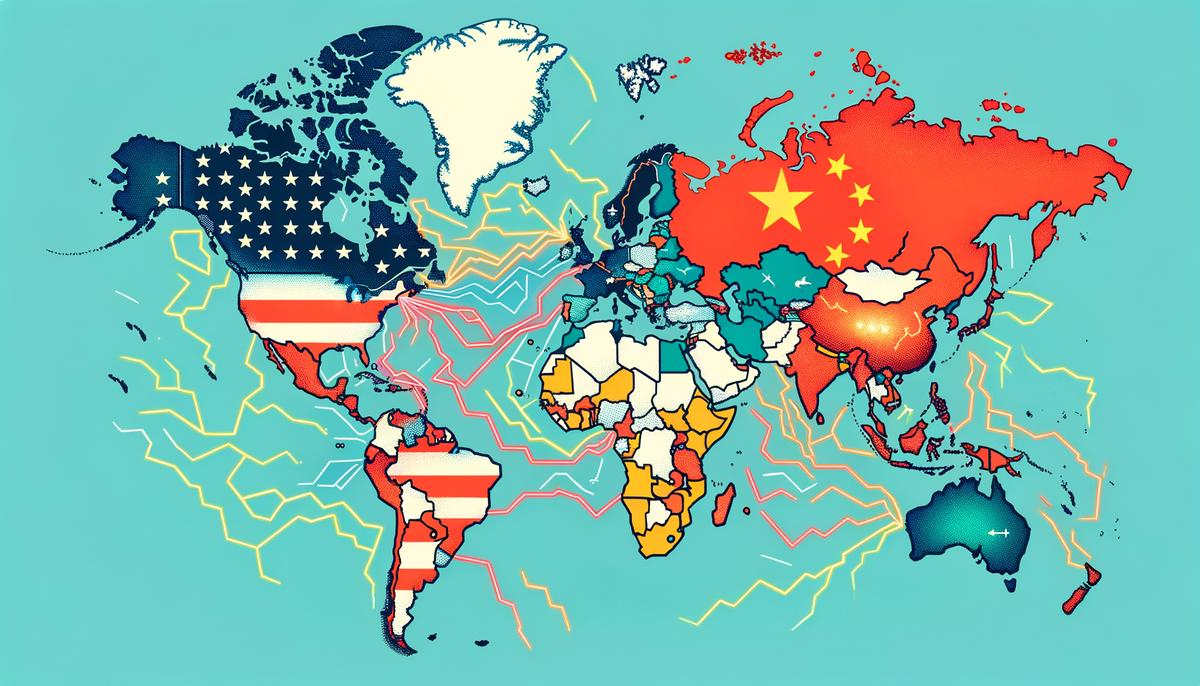
Globally, countries are bracing for the ripple effects of this economic showdown. The stakes are high, with fears of a fracturing world economy looming large. Allied nations might find themselves picking sides or scrambling to maintain global stability.
Trump seems to view these challenges as opportunities, unfazed by the mounting pressure. Countries are lining up to reframe their trade relationships with America. But in this test of wills, the potential for misstep is substantial. Global markets are hanging on every move, every tweet, as the world watches this high-stakes economic drama unfold.
Market Volatility and Industry Impact
As trade tensions soar, the global economic landscape stands at a crossroads. Analysts are scrutinizing every development to anticipate potential shifts in markets and industries. Confidence in reaching a trade deal with the U.S. under the current administration seems shaky.
Global markets are caught in a whirlpool of volatility, reacting sharply to Trump's tariff measures. There's growing concern over prolonged instability, with market indices swinging erratically.
Industry Implications
- Industries reliant on global supply chains are bracing for potential disruptions
- Automotive and tech sectors are rerouting logistics
- Companies are revisiting pricing strategies and adjusting financial forecasts
- These adjustments could signal slowdowns in production and growth
The cascade of tariffs might impact consumer confidence, as price increases reflect on goods. Some companies may absorb these costs, while others may pass them down to consumers, potentially leading to less spending and economic slowdown.
Financial markets have responded with marked pessimism. Stocks are on a roller coaster, and investors are jittery. Many market watchers warn of a possible retreat in investments due to uncertainty over a potential market slowdown.
Countries worldwide are rattled by the magnitude of these moves. They're weighing the prospects of a new economic order against the risk of retaliatory measures that could fracture the foundation of globalization. Will we see reconciliation or a new cycle of economic tension?
-
1. Reuters. US Stock Market Donald Trump Tariff Live Updates.
2. CNBC. Donald Trump Tariff Policy News LIVE Updates.
3. Bloomberg. Interview with Howard Marks.
4. Washington Post. Asian Market Analysis.
5. Yahoo Finance. Jordan Weissmann commentary.
6. New York Times. Wall Street reactions to tariff measures.
7. Wall Street Journal. Trader responses to Trump's tariffs.