
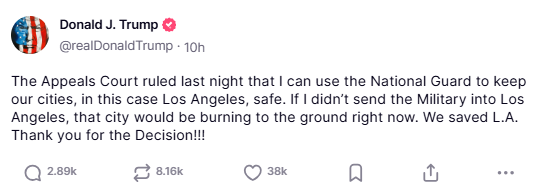
In a strong display of leadership not seen in DECADES, President Donald J. Trump acted swiftly to restore order to a burning Los Angeles — only to have an unelected liberal judge try to stop him.
The judge’s attempt didn’t last long. Within hours, an appeals court put the brakes on that rogue ruling, handing the Trump administration a critical win in its fight to protect American cities.
The President Leads. The System Fights Back.
The courtroom drama unfolded on Thursday when U.S. District Judge Charles Breyer attempted to block President Trump’s emergency deployment of the National Guard to Los Angeles, declaring it “illegal.” His prop? A pocket Constitution held high like a weapon. His agenda? Undermining the Commander-in-Chief during a national security crisis.
But the Trump administration fired back — fast. Justice Department lawyers made the case clearly: “There is one Commander-in-Chief,” and that is the President of the United States. In times of crisis, America doesn’t need a permission slip from California’s governor or from a liberal judge acting more like an activist than a jurist.
Federal Power Means Federal Action
The Constitution is clear. In a national emergency — especially one that threatens citizens, police, and federal property — the President has the duty to act. That’s exactly what Trump did. He saw chaos in the streets, flames lighting up the skyline, and local politicians refusing to lift a finger. So he stepped in. That’s leadership.
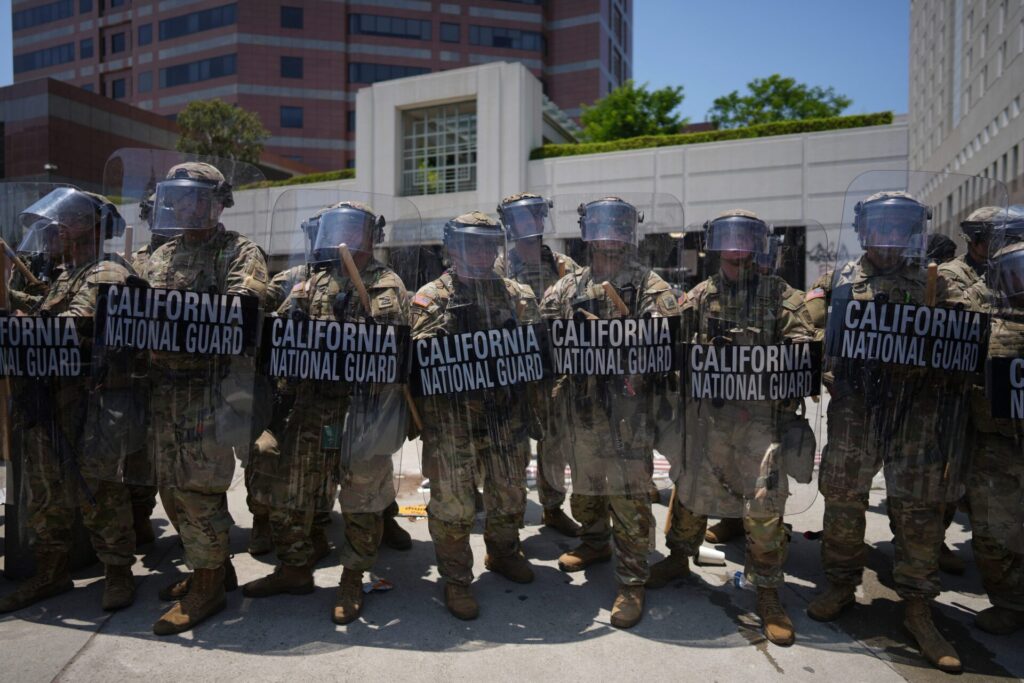
The judge claimed that the National Guard “belongs to the states.” What he ignored is that the Guard can — and must — be federalized when public safety is at stake. Trump called the situation what it was: a rebellion.
And under the law, that gives him every right to restore peace, with or without Governor Newsom’s blessing.
A Judge’s Power Trip Halted
Breyer’s statement was pure theater. Comparing President Trump to King George may win applause from the MSNBC crowd, but it doesn’t change the law — or the facts on the ground. Trump followed the law. He didn’t ask for special powers. He used the ones the Constitution already grants him as Commander-in-Chief.
Breyer’s ruling didn’t stand. The appeals court saw right through it and halted the decision — a major setback for anti-Trump forces hoping to undermine federal authority at every turn. The troops stay where they belong — protecting Americans in Los Angeles.
The Real Overreach: Judicial Activism
At a congressional hearing, Defense Secretary Pete Hegseth delivered a truth bomb: “We should not have local judges determining foreign policy or national security.” He’s right. That’s not the judiciary’s job. That power rests with the elected executive, not with one judge who decides to play king from the bench.
These activist judges don’t want to uphold the Constitution — they want to rewrite it. When the President acts lawfully to protect the country, and a judge cries foul, it’s not a defense of liberty. It’s a tantrum.
Trump Stands Tall. The Courts Blink.
The appeals court’s ruling may not be the final word, but it’s a strong signal: President Trump’s authority is legitimate, his leadership is unwavering, and his commitment to American safety will not be derailed by political stunts in a courtroom.
This moment wasn’t just about Los Angeles. It was about whether America still believes in decisive leadership — or whether we allow weak governors and leftist judges to hold the country hostage. Trump chose action. The courts blinked. And the American people are safer for it.