
Trump Designates New Victory Days for World Wars
President Donald Trump has designated May 8th as Victory Day for World War II in the U.S., aligning with Europe’s “Victory in Europe Day” tradition. Trump argues that America should celebrate its victory more enthusiastically, emphasizing the nation’s significant role in the war effort. “Nobody was close to us in terms of strength, bravery, or military brilliance,” he declared.
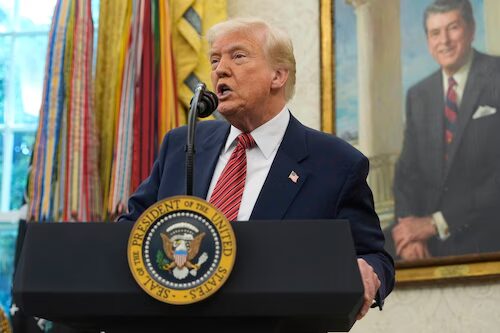
Trump also proposes making November 11th Victory Day for World War I, aiming to revive the memory of that armistice. However, only Congress can officially change federal holidays, so these designations remain proclamations for now.
The president’s social media posts hint at grand celebrations, inspired by overseas commemorations. Rob Couture from the Veterans of Foreign Wars supports the idea, welcoming attention for veterans. Despite these plans, May 8th won’t be a day off work without congressional approval.
Trump’s proclamations highlight his belief in the crucial role of the American military in shaping history. His goal is to reinvigorate America’s collective memory of its wartime accomplishments.
Clarifications and Implications
The White House clarifies that Veterans Day on November 11 will remain unchanged, as only Congress can officially rename federal holidays. Trump’s gesture to frame November 11 as Victory Day for World War I is a proclamation, adding an extra layer of remembrance without altering the existing holiday.
This approach allows Trump to honor veterans while avoiding potential controversy. Veterans organizations appreciate the spotlight on their sacrifices, seeing it as a moment of recognition for their contributions to America’s freedom.
- Proclamations don’t create new holidays
- Reignite pride in America’s role
- Encourage reflection on historical events
By breathing new life into these commemorations, Trump encourages Americans to take pride in their history and the victories won, while still honoring the solemn sacrifices made by veterans.
International Celebrations and American Aspirations
Victory in Europe Day is celebrated with grandeur across the continent. In the UK, jubilant parades fill the streets, with airplanes soaring overhead and the royal family saluting from Buckingham Palace. France holds ceremonies at the Arc de Triomphe, where thousands gather to lay wreaths in gratitude.
Russia’s Victory Day is particularly spectacular, featuring an extravagant display of military might in Moscow. Tanks rumble through the streets and warplanes draw arcs across the sky, underscoring the nation’s pride in its role in defeating Germany.
Trump envisions similar widespread celebrations in the U.S., questioning why America isn’t leading this commemorative charge. His assertion that “without the U.S., the Victory was only accomplished because of us” has sparked discussions about the nature of alliance and collective triumph.
The president’s push for grand commemorations reflects his desire to see American streets filled with the same celebratory fervor seen in European jubilations. His declaration serves as a call to action, urging America to join in the global tradition of honoring its wartime victories and fallen heroes.
"We are going to start celebrating our victories again!"
How might these international practices inspire new American traditions? What would it look like for the U.S. to embrace such fervent celebrations of its military accomplishments?
- Trump D. Truth Social post on Victory Day designations. May 2025.
- White House Press Office. Statement on Veterans Day and Victory Day proclamations. May 2025.
- Congressional Research Service. Establishing Federal Holidays. 2024.
- Veterans of Foreign Wars. Statement on proposed Victory Day celebrations. May 2025.