
In a move that’s as much about restoring justice as it is about reaffirming American values, Trump announced a full and unconditional pardon for Ross Ulbricht – the man behind the Silk Road marketplace.
For years, Ulbricht’s story has been a symbol of government overreach, excessive sentencing, and the deep state’s fear of digital innovation. Now, with one signature, Trump has brought that injustice to the national stage.
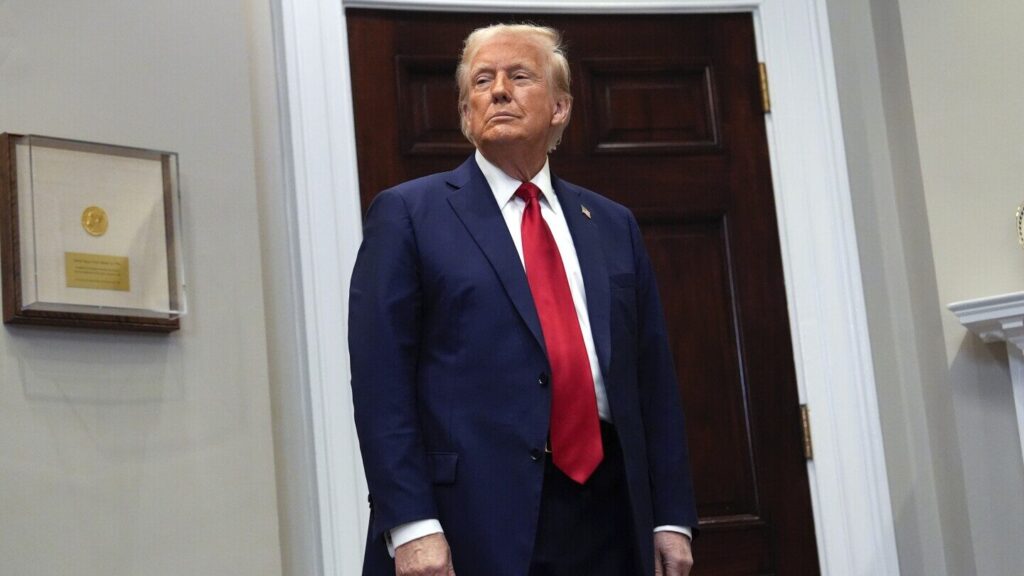
The Silk Road was a pioneering experiment in free markets, individual liberty, and digital sovereignty. Ulbricht, a libertarian-minded entrepreneur with a brilliant academic record and a passion for economic freedom, built a platform that challenged government control. For that, he was handed two life sentences plus 40 years – a punishment that many say far exceeds the crime.
Trump’s decision to pardon Ross isn’t just about one man. It’s a powerful rebuke of a system that crushes innovation when it threatens the status quo. It’s a reminder that real leadership means righting past wrongs—especially when the swamp tries to bury them.
As Trump kicks off his second term with energy and unapologetic conviction, this pardon sends a message loud and clear: The era of political prisoners and tech scapegoats is over. And for freedom-loving Americans? It’s a long-overdue victory.
Trump’s Bold Move: Pardoning Silk Road Founder Ross Ulbricht
President Trump, sharp as ever, took to his Truth Social to announce the full and unconditional pardon of Ross Ulbricht, the mind behind the infamous Silk Road marketplace. With the ink barely dry on his second-term office pen, Trump wasted no time fulfilling promises and setting straight what he views as a misstep by the justice system. He shared with his followers:
"It was my pleasure to have just signed a full and unconditional pardon of Ross,"
dropping this bombshell publicly, which had already been disclosed to his mother in a personal phone call.
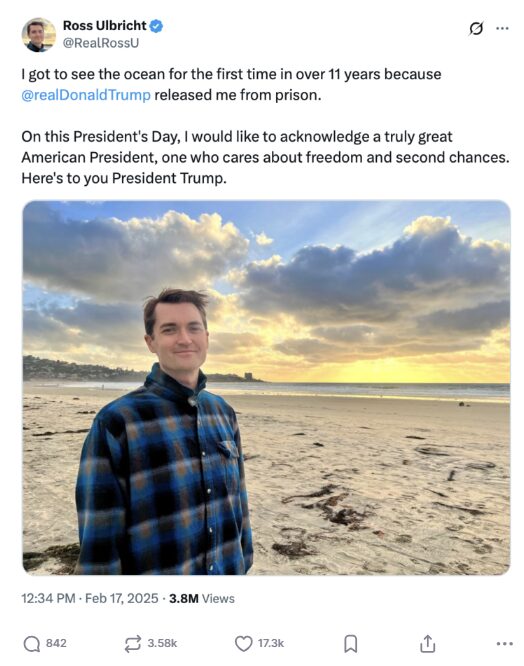
Trump did not hold back. In his post, he shared that a conversation with Lyn Ulbricht, Ross’s mother, had been part of his decision-making process. Championing Ulbricht’s case, Trump referred to the investigators as “the scum that worked to convict him,” linking them to a wider story of government overreach that he frequently opposes. This choice phrase resonated with many supporters who have long questioned the fairness of Ulbricht’s sentencing.
Trump’s critique wasn’t limited to the procedural folks in Ulbricht’s trial but extended to a broader commentary on government overreach—a consistent theme that echoes Trump’s larger message. The pardon is not just an act of clemency but a statement against what Trump believes to be oppressive judicial maneuvers.
The pardon echoes sentiments from Trump’s campaign trail days, where Ulbricht’s situation was marketed vocally among libertarian circles, earning political traction. Trump’s call out on critical government missteps fits perfectly in his ongoing tale of a justice system needing reform—one verdict at a time.
The Silk Road Saga: Ross Ulbricht’s Journey from Eagle Scout to Cyber Outlaw
Ross Ulbricht’s journey began in Austin, Texas, where he was born in 1984. This former Eagle Scout had his sights set high, utilizing his sharp intellect to earn degrees in physics from the University of Texas at Dallas and in materials science from Pennsylvania State University. With a mind humming with libertarian philosophies, Ulbricht wasn’t just dreaming of new horizons—he intended to create them.

In 2011, Ulbricht brought this vision to life by founding Silk Road, an online marketplace that promised the freedom of a true free market, unshackled by government interference. Utilizing the anonymity-loaded tech of Tor and Bitcoin, Silk Road became a bustling bazaar where transactions were untraceable.
The market quickly earned a reputation for illegal drug trades. Customers logged on from all around the globe for what can only be described as a “one-stop-shop” for all things illicit. Law enforcement had their sights firmly trained on this digital Wild West. In 2013, the feds swooped in, arresting Ulbricht in a San Francisco library. He faced several charges, including:
- Computer hacking
- Money laundering
- Drug trafficking conspiracies
After a highly publicized trial in 2015, Ulbricht was given a sentence that could make even stone-faced judges flinch: two life terms plus 40 years, with no chance of parole. Critics were quick to point out that the sentence seemed more about making an example rather than equitable justice.
Ulbricht’s use of pioneering technologies like Bitcoin was less a mechanism of crime and more an illustration of his vision of economic freedom and privacy. Yet, it was these very tools that fast-tracked his courtroom downfall. They posed a challenge to the powers that be, a fact not lost on Trump as he denounced the case as oppressive government conduct.
Stepping out from under the shadow of punishment, Ulbricht’s story is now poised for new chapters—ones that just might turn heads on what true freedom within digital landscapes looks like. With Trump’s pardon acting as a catalyst, this could very well spark renewed discussions around reforming a justice system running on outdated leads, unable to keep pace with the leaps of technology and liberty.

Libertarian Support and Trump’s Strategic Alliance
Libertarian support for Ross Ulbricht’s release has been nothing short of tenacious, rooted in the ideals of economic freedom, personal liberty, and minimal government intervention. The movement has been pivotal in keeping Ulbricht’s name alive in public discourse, wielding campaigns, petitions, and rallies all under their unifying “Free Ross” banner. These advocates see Ulbricht as more than a cautionary tale; to them, he’s a beacon in the fight against expansive governmental power.
Trump’s pardon of Ulbricht was foreshadowed by his pronouncements at the Libertarian National Convention, where he promised to commute Ulbricht’s sentence if re-elected. This pledge resonated deeply with the values cherished by libertarians, further cementing Trump’s bond with a faction that vehemently supports the dismantling of bureaucratic red tape that strangles individual autonomy.
Trump’s alignment with libertarian ideals is a politically astute strategy, resonating with a significant portion of his base that idolizes the disruption of traditional political norms. By championing Ulbricht’s cause, he positions himself as a staunch supporter of liberty, winning over libertarian hearts and further bolstering his coalition of support.
As Trump continues to map his political trajectory in this second term, his actions speak louder than campaign rhetoric—here is a president seemingly committed to reinforcing libertarian values when it suits his broader ambitions. This symbiosis between Trump’s political objectives and libertarian activism is not only about Ulbricht’s freedom; it’s about the broader libertarian pursuit of:
- Justice reform
- Victory against regulation
- Affirmation of individual sovereignty
With a coalition now strengthened by the shared victory, there is anticipation among libertarians that this triumph heralds further engagement with digital rights issues and a more harmonious relationship between government policy and individual freedoms. This convergence of political ambition and activism lays a foundation for future policy shifts, lauded by those who believe that less—is truly more!
- Associated Press. Trump pardons Silk Road founder Ross Ulbricht. Associated Press News. January 2025.
- Department of Justice. Ross Ulbricht, the Creator and Owner of the “Silk Road” Website, Found Guilty in Manhattan Federal Court on All Counts. Press Release. February 2015.
- Libertarian National Committee. Statement on Ross Ulbricht Pardon. January 2025.