
Trump's Executive Order Raises Concerns Over Insurrection Act
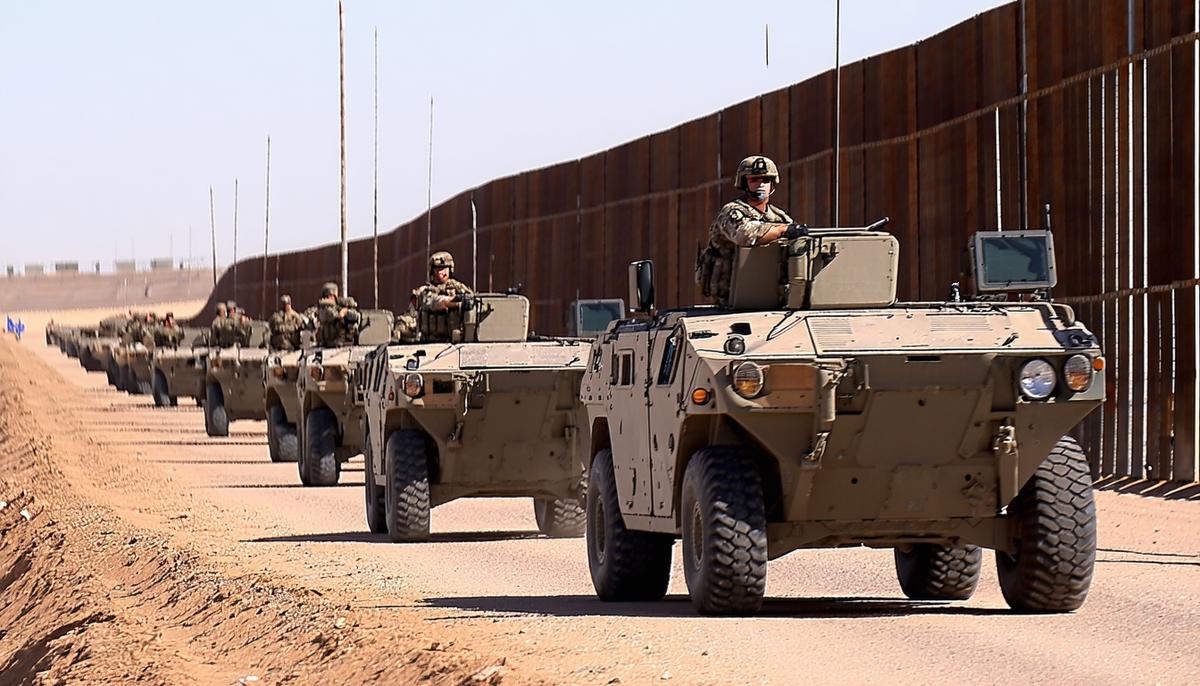
President Donald Trump has once again stirred controversy with an executive order declaring a national emergency at the southern border. The order includes a clause about potentially invoking the Insurrection Act of 1807, which could involve military forces on U.S. soil as early as April 20.
The Insurrection Act grants the President authority to deploy military and National Guard forces in cases of rebellion or uprising. It's important to note that this is not equivalent to martial law, where the military assumes full control. Under the Insurrection Act, armed forces would assist civilian authorities rather than supersede them.
Key developments since the January executive order include:
- 1,500 active-duty service members dispatched to the southern border
- Air and intelligence assets deployed
- Guantanamo Bay preparing to potentially house up to 30,000 criminal migrants
- Defense Secretary Pete Hegseth and Homeland Security Secretary working on a report due by April 20
As the April 20 deadline approaches, anticipation builds. Will Trump invoke the Insurrection Act to assert control over the borderlands? With tensions high and rumors swirling, all eyes are on the next move in this high-stakes political chess game.
Understanding the Insurrection Act
The Insurrection Act of 1807 is a powerful legislative tool that allows for domestic deployment of U.S. military and National Guard forces in times of chaos. Its primary purpose is to provide support when civilian law enforcement requires additional assistance. Unlike martial law, the Insurrection Act maintains civilian governmental control, with the military playing a supporting role.
Critics have raised concerns about the Act's ambiguity, which could potentially lead to misuse or misinterpretation. Key questions remain unanswered:
- Who determines what constitutes an 'insurrection'?
- Under what specific circumstances should the military be deployed?
- How is the balance between civilian and military authority maintained?
As the April 20 deadline looms, speculation grows about whether these deliberations might result in unprecedented military involvement in domestic affairs. Will Trump's potential use of this powerful option be viewed as a necessary measure or a controversial overreach? The nation watches closely, awaiting the next developments in this unfolding situation.
Anticipation Builds as April 20 Approaches
Americans are on edge as April 20 draws near, wondering if President Trump will invoke the Insurrection Act to bolster border security efforts. For Trump supporters, this could be seen as a decisive victory, demonstrating his commitment to protecting America's borders. Critics, however, worry it might represent an overextension of presidential authority.
Defense Secretary Pete Hegseth has remained tight-lipped as the deadline approaches. While thousands of soldiers have already been deployed to secure the southern border, questions linger about their future role:
- Will they remain on standby?
- Or will Trump grant them expanded authority?
The nation is watching intently for signs of Trump's next move. Could this lead to unprecedented security measures? Or is it simply setting the stage for more political drama? Both supporters and skeptics are bracing themselves for whatever comes next in this Trump-led saga.
"The complexity of the current situation requires that our military take a more direct role in securing our southern border than in the recent past," according to the presidential memo.
One thing is certain – America is tuned in, waiting with bated breath to see what unfolds on April 20. This goes beyond mere politics; it's a pivotal moment that could reshape how our democracy functions and evolves. As we wait, the air is thick with tension, echoing the passionate sentiments of citizens on all sides of this contentious issue.
- National Emergencies Act, 50 U.S.C. § 1601 et seq.
- Insurrection Act of 1807, 10 U.S.C. §§ 251–255.
- Posse Comitatus Act, 18 U.S.C. § 1385.
- Nunn J. The Insurrection Act Explained. Brennan Center for Justice. 2020.
- Carville J. Politics War Room [podcast]. 2025.