
Trump’s Meeting with Syria’s New Leader: A Diplomatic Breakthrough
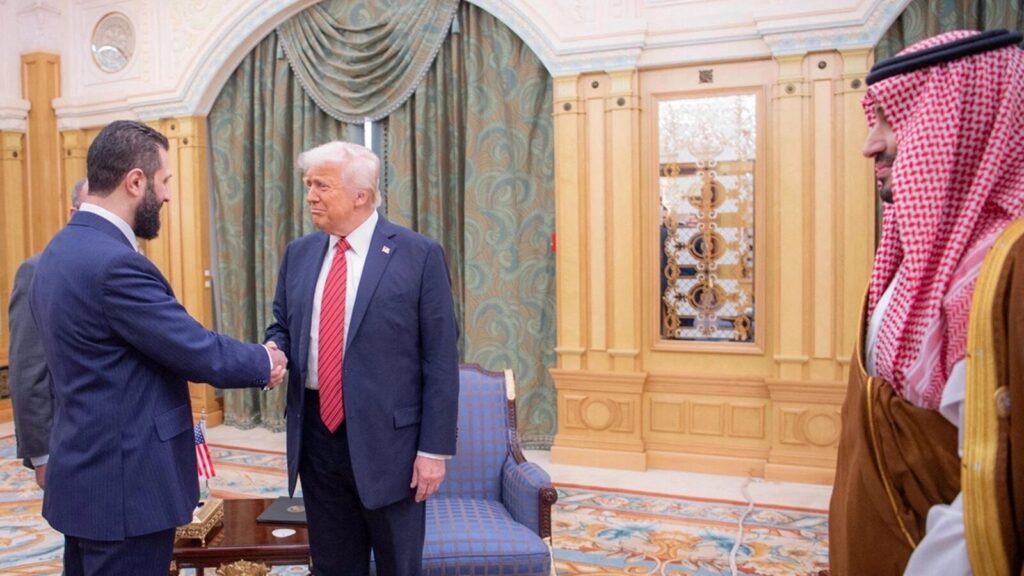
Donald Trump’s meeting with Syria’s new leader, Ahmed al-Sharaa, marked a significant moment in international politics. Taking place in Saudi Arabia, this engagement aimed to reshape US-Syrian relations. Trump met al-Sharaa, a former jihadist who once had a $10 million bounty on his head — quite the “tough guy,” as Trump pointed out. Trump’s positive review of al-Sharaa as a “young, attractive guy” likely raised eyebrows in geopolitical circles.
For years, sanctions had severely impacted Syria’s economy. Trump’s decision to lift these sanctions was a game-changer, and the excitement in Syria was evident. Ordinary Syrians watched in amazement as images of their leader alongside Trump and Mohammed bin Salman circulated.
Key Objectives of the Meeting:
- Normalize ties with Syria
- Repair US-Syrian relationship
- Present new directives to Syria
New directives were presented to Syria as part of this diplomatic effort. These included:
- Deporting Palestinian terrorists
- Joining the Abraham Accords
- Managing Syria’s chemical weapons stocks
Trump labeled these ideas as a “chance for greatness.”
Public sentiment in Syria was mixed. After years of isolation and economic hardship for much of its population, this was seen as a potential turning point. Vehicles filled with flag-waving Syrians coursed through Damascus’ streets, while social media buzzed with supportive videos.
"He's got a real shot at holding it [Syria] together,"
Trump said, balancing skepticism and optimism during Air Force One conversations.
This meeting could potentially transform the future of the Middle East. Trump’s approach isn’t about conventional strategies — it’s about creating space for unexpected cooperation.
Economic Implications and International Reactions
The impact of lifting these sanctions will likely boost Syria’s economy. With economic embargoes loosened, Syria may reintegrate into the global economy. Companies might now consider Syria for investment. This also means the country’s infrastructure, damaged by years of conflict, has a chance to rebuild.
White House Conditions for Sanction Lifting:
- Protecting minorities
- Addressing chemical weapons concerns
- Adhering to a 12-point plan for stability
Reactions in Syria were largely positive. Government officials expressed gratitude, and people celebrated in the streets of Damascus. The sense of hope was palpable as Syrians embraced the prospect of positive change.
However, questions remain. Will Syria fulfill its obligations and seize this opportunity to transform? And how will the international community respond?
Trump’s move isn’t just about assisting Syria but about fostering unexpected diplomacy in the region. His approach seeks to reframe relationships between adversaries and allies in the pursuit of stability.
By granting Syria this opportunity, Trump sets the stage for potential geopolitical shifts. The world watches to see if Syria, under Ahmed al-Sharaa’s leadership, will rise to the challenge and prove the effectiveness of Trump’s vision.
Trump’s Middle East Strategy: Beyond Syria
Trump’s influence in the Middle East extends beyond single events. It involves complex diplomacy, new alliances, and a vision for economic growth. Trump’s support for Syria’s inclusion in regional peace initiatives like the Abraham Accords demonstrates his strategy to promote cooperation over conflict.
Syria’s potential, according to Trump, isn’t just talk; it’s a call to transform the country’s prospects. He’s focused on encouraging regional stability and prosperity. By lifting sanctions, Trump has opened doors to integration and sent a signal to other nations.
Key Players in Trump’s Middle East Strategy:
- Saudi Arabia
- Turkey
- Gulf leaders
Saudi Arabia and Turkey played important roles in influencing Trump’s decision. These partnerships strengthen Trump’s vision of peace and prosperity across the region.
Trump’s critics might see his actions as controversial, but they represent a deliberate strategy. His ability to form alliances with Gulf leaders is part of a complex diplomatic effort aimed at promoting peace.
The possibility of Syria joining the Abraham Accords, aligning with countries like Bahrain and the UAE, further supports Trump’s plan. It’s an attempt to bring lasting peace to the Middle East.
As allies across the Gulf region have supported Trump’s initiatives, there’s a common thread: optimism for the Middle East’s future. Trump’s strategy aims for both economic growth and cultural understanding. Will this approach succeed in a region with a turbulent history? Only time will tell.
Trump’s actions present bold new possibilities for the region. His relationships with Gulf leaders, combined with economic ambitions, point towards potential prosperity. As supporters wait eagerly, it’s clear that under Trump’s leadership, significant changes may be possible.
- Ford R. Interview with the BBC. May 2025.
- Leavitt K. White House Press Secretary Statement. May 2025.
- Trump D. Speech at Saudi Investment Forum. Riyadh, Saudi Arabia. May 2025.
- Al-Shaibani A. Post on X (formerly Twitter). May 2025.
- Pedersen G. United Nations Special Envoy for Syria Statement. May 2025.
- Graham L. Press Release. May 2025.
- Basha O. Interview with CNN. May 2025.
- Al-Shaar MN. Interview with Al Arabiya. May 2025.
- Hall N. Interview with CNN. May 2025.